
Vapor barrier installation in Buckeye AZ - a barrier where your house needs it
Damp crawl space or a new slab going in? I'll look at how your house is built and put a barrier only where it helps.

I look at every job myself
I come out to see every house myself, because I'd rather you understand your own home than sign off on work you don't follow. When we do the job, our installers work with me on site.
Our own business since 2023
I learned insulation working on other crews before I started this business in 2023. We're based in Buckeye and work in the cities around it, and if yours isn't listed, call and ask.
Licensed and insured on every job
We're licensed and insured. Satisfaction guaranteed on every job. When you're ready to have someone look at your crawl space or slab plans, call (602) 325-8993 or fill out our estimate form.
Vapor barriers in Buckeye, explained plainly
A vapor barrier, which some folks call a vapor retarder, is a layer added to your house's air barrier where water vapor slowly passing through materials can cause trouble. Complete Buckeye Insulation Services installs them in Buckeye homes, crawl spaces and new slabs that call for one.
Most folks call because a builder, a neighbor or a video said they need one, or because the crawl space smells damp. Before anything goes in, I want to know where it would sit and why. A vapor barrier is a bit like a barn door. Hung in the right place it keeps weather out, and hung in the wrong place it shuts moisture in with nowhere to go. That's really the whole job.
What moves the price is mostly where the barrier goes and how hard it is to reach. A tight crawl space takes more work than an open one, and old insulation that has to come out adds a step. The schedule turns on whether the job needs a permit and, for a slab, when the concrete crew plans to pour. Your written estimate lays all of that out, and I go over it with you line by line.
How we handle vapor barrier installation
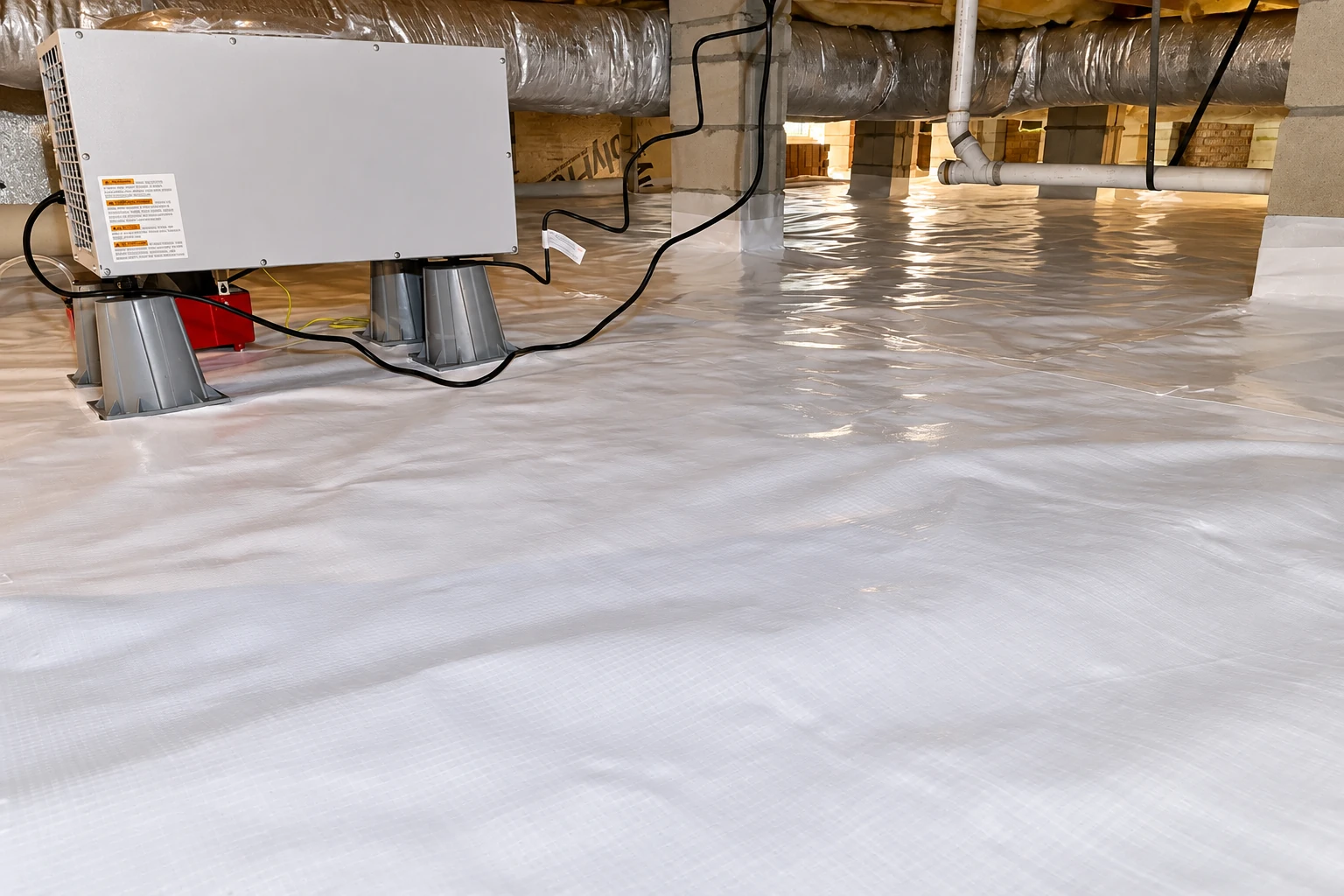
Crawl spaces get full ground cover
In a crawl space, the barrier is a plastic ground cover laid over the dirt. Put in well, it helps keep ground moisture and soil gases like radon from working up toward your floors. We lay it so it covers the whole floor with no bare dirt showing at the edges, because moisture always finds the one corner that got skipped. Federal weatherization guidance sets a minimum thickness and a low vapor rating for that sheet, so ask me which one we're using and I'll show you.
Under a new slab, before the pour
An under-slab barrier has to go down before the concrete does, so this is work for a new slab, an addition or a shop floor, not a house that's already standing. We lay it over the prepared ground and fit it around the pipes coming up through, because once the concrete is poured, nobody's getting back under there. If your lot is in a floodplain, the Flood Control District of Maricopa County issues the Floodplain Use Permit, and you need one before new building or grading work, even when the city needs no permit.
Walls, attics and the air leaks
Air leaking through gaps usually carries far more water vapor than a barrier ever stops, so while we're there I check for leaks, and plenty of jobs end up including attic air sealing around lights, pipes and the hatch. Walls take some care too. Older federal guidance, from 2003, says walls in hot climates need to dry toward the inside, which means breathable inside finishes, unfaced fiberglass batts and no vinyl wallpaper. When we add retrofit insulation to existing walls, I keep that in mind.
Find out if your house needs a vapor barrier
We reply within one business day to set up a free on-site estimate, with no pressure to book. Tell us if it's a crawl space, a slab or walls, and whether your lot sits in a floodplain.
(602) 325-8993What happens after you call us
I come out and look
When you call, I come out myself and look over the crawl space, walls, attic or the spot where the slab will go. I take photos so I can walk you through what I found, and you can ask me anything.
First things first, then the estimate
We check what has to be handled first, like old wiring, old insulation, roof leaks and gas appliances, then you get a written estimate. For a crawl space, plan to clear out stored things so the ground cover can reach every corner.
Seal, install, then a walkthrough
If you go ahead, we seal the gaps first and then put the barrier and any insulation in, because good material in the wrong order doesn't do its job. Before we pack up, I show you the finished work.
Vapor barrier questions from Buckeye homeowners
Does every home in Buckeye need a vapor barrier?
No. Whether a home needs one depends on the climate and how the house is built, and those same things decide where it goes and how it's put in. That's why I look at your crawl space, walls or slab plans before I recommend anything, and if you don't need one, I'll tell you so.
What happens if a vapor barrier goes in the wrong place?
The wrong kind of vapor layer in the wrong spot can make the walls, roof or floor that keep weather out fail early. Usually that's because moisture gets shut in where it can't dry. Before we install anything, I work out where your house needs room to dry and where a barrier actually helps.
Which vapor barrier should go under a new concrete slab?
For homes on clean sites, one under-slab maker starts with a standard plastic barrier, which blocks water and water vapor. That kind can't stop smaller gas molecules over long periods, so the maker says the contaminants in your soil decide whether an EVOH gas barrier, a sheet made to hold back gases, is the better fit.
Do I need a permit for a vapor barrier in Buckeye?
It may, and the city's list doesn't say either way. Buckeye requires permits to alter, repair or improve any building, and its list names fencing, pools, patios, solar and re-roofs, not vapor barriers. You can ask the Buckeye Permit Center, and before we start, we check with the office covering your address and handle any permit needed.